When selecting the type of air conditioner you will need there are two major decisions you will need to make:(1) whether to install a split system or a self-contained unit and (2) what type of split system or self-contained unit to install.
Step 1: Select a Split System or Self-Contained Unit
Central air conditioners come in the form of a split system or a self-contained unit.
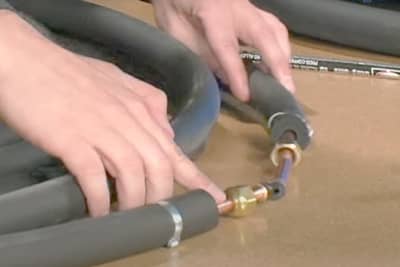
Split system air conditioners have components that are installed both inside and outside the home. In a split system, the compressor and condenser coil (contained in a standard unit or heat pump), are installed outside the home, and the evaporator coil is installed inside the home in the plenum of a forced-air furnace or air handler. The indoor and outdoor components of a split-system are usually connected by two refrigeration lines and a low-voltage relay cable. Cold air is distributed through a duct system to each room in the home.
Self-contained air conditioners sit outside the home or on the roof and all components are contained internally. These fully self-contained furnaces and air conditioners are pre-charged with Freon and ready to be used for rooftop or ground mount residential or commercial applications. Like the split system, the self-contained units use a duct system to distribute cold air throughout the home.
Select a Split System if:
- You are replacing a standard air conditioner, split system condenser And / or…
- You have (or will be installing) a forced air furnace or air handler which is located inside the home, attic, crawlspace, basement, etc.
- You have 220 volts AC available
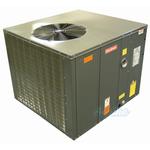
Select a Self-Contained Unit if:
- You are replacing a self-contained furnace / air conditioner And / or…
- Your complete system will be located entirely outside the home on the ground or roof
- You have 220 volts AC available
Step 2: Select the Type of Split System or Self-Contained Unit You Will Require
Self-Contained Air Conditioners
If you determined that you will require a self-contained air conditioner, the next step it to choose from three standard models:a standard furnace and condensing unit combination, a heat pump, or a condensing unit with optional electric heat.These three models contain all of the necessary central air conditioner components and sit entirely outside the home, on the ground or on the roof.
Select Gas Heat and Electric Air Conditioning – Self-Contained if:
- You are replacing a self-contained furnace / air conditioner And / or…
- Your complete system will be located entirely outside the home on the ground or roof
- You want air conditioning and gas heat
- Your available fuel type is natural gas or liquid Propane (LP)
- You have 220 volts A/C available
Select Heat Pump Electric Heat and Air Condioning – Self-Contained if:
- You are replacing a self-contained heat pump And / or…
- Your complete system will be located entirely outside the home on the ground or roof
- You would like equipment with very low operating costs for heating your home when the outside temperature is above 25 degrees. (A heat pump can be paired with a secondary source of heat for providing additional heat when temperatures are below 25 degrees.)
- You want air conditioning and electric heat
- You have 220 volts A/C available
Select Standard AC – Self-Contained if:
- You are replacing a self-contained air conditioner And / or…
- Your complete system will be located entirely outside the home on the ground or roof
- You want air conditioning with the add-on option of electric heat
- You have 220 volts A/C available
Split System Air Conditioners
If you determined that a split system will work best for you, the next step is to decide if you would like a standard split system or a heat pump split system.
A condensing unit is the main component of a standard split system.Inside it is a pump called a compressor, coils, fan and electrical system. When a standard air conditioning system (with a condensing unit) is operated, the condenser gets warm and the evaporator coil gets cold, which cools the home in summer.
With a heat pump, the same happens in summer, but in winter, the reverse occurs: the outside condenser gets cold and the inside evaporator coil inside the air handler gets warm, thereby heating the home. Heat pumps are a highly efficient method of heating your home when the outside temperature is above 25 degrees.If you live in an area where the temperature regularly falls below 25 degrees, a secondary heat source such as a gas, oil or propane furnace, or electric resistance heat (heater coils) is required to keep your home warm on the coldest days.Pairing the two heating systems together is called a two-stage heating system (or “hybrid” system), and is commonly done to achieve low operating costs.We will gladly help you select the appropriate two-stage heating equipment for your home.

When deciding between a standard system or heat pump, keep in mind the average temperatures in your area. If you live in an area where the temperature regularly falls below 25 degrees, a secondary heat source such as a gas, oil or propane furnace, or electric resistance heat (heater coils) is required to keep your home warm on the coldest days.
Select a Standard Unit if:
- You are replacing a standard unit
- You live in a climate where temperatures drop below 25 degrees F.
- You want higher efficiency
Select a Heat Pump if:
- You are replacing a heat pump
- You have (or will be installing) an air handler which will be located inside the home, attic, crawlspace, basement, etc.
- You would like equipment with very low operating costs for heating your home when the outside temperature is above 25 degrees.(A heat pump can be paired with a secondary source of heat for providing additional heat when temperatures are below 25 degrees.)
- You are looking for the added benefit of heat in milder climates
Split system central air conditioners contain various components that must be matched up accordingly. We have a special System Selector to help you select all the right components. For more information on all the necessary components of a split system, see Selecting Air Conditioner Components.
In a split system, the compressor and condenser coil (contained in a standard unit or heat pump), are installed outside the home, and the evaporator coil is installed inside the home in the plenum of a forced-air furnace or air handler. The indoor and outdoor components of a split-system are usually connected by two refrigeration lines and a low-voltage relay cable.
Now that you know what type of central air system you would like it’s time to select the right-sized unit. See Selecting Air Conditioner Size for more information.